Ultra-Soft Japanese Milk Bread (Hokkaido Shokupan) — Tangzhong Method for Cloud-Like Sandwich Loaves
Japanese milk bread — often called Hokkaido milk bread or shokupan — is celebrated worldwide for an exceptionally tender, pillowy crumb, a glossy, golden crust, and a faintly sweet, milky aroma. What sets it apart from ordinary sandwich loaves is the tangzhong (water-roux) technique: a small portion of flour cooked with water or milk until it thickens, then incorporated into the dough.
This method pre-gelatinizes starches so the finished loaf traps more moisture, stays softer for longer, and develops that characteristic silk-like texture bakers chase. On Pinterest and social feeds, search terms like “tangzhong bread,” “Hokkaido milk bread recipe,” “cloud bread loaf,” and “soft sandwich bread” trend consistently among home bakers seeking professional bakery results with home-kitchen simplicity.

The appeal goes beyond texture. Japanese milk bread also embodies an understated flavor profile: slightly sweet, faint vanilla or milk notes, and a subtle buttery richness that makes it perfect for both sweet and savory applications—everything from classic sandwiches to French toast and milk-toast desserts.
Because of its resilience (it keeps fresh longer than many other white breads), it’s become a favorite for meal prep, lunchbox solutions, and photogenic recipe posts that perform well on Pinterest. The loaf’s high hydration and enriched dough produce thin, even slices that present beautifully in photos and stack cleanly for sandwiches, which helps explain its viral status among food influencers and everyday cooks alike.
Also read: Crispy Almond Flour Pizza Crust Recipe

Nutritional Overview: What You Get from a Slice of Japanese Milk Bread
Japanese milk bread is an enriched white bread—meaning it contains milk, butter, and often eggs—so it provides more fat and micronutrients than a basic lean white loaf. Nutritional values vary depending on whether you use whole milk or low-fat milk, butter versus oil, or incorporate whole-grain flours. Below is an approximate nutritional profile for one standard 1-inch slice (about 40 g) from the classic recipe this article will supply (using whole milk, butter, and standard white flour):
- Calories: ~120–140 kcal
- Protein: ~3–4 g
- Total Fat: ~3.5–5 g (including ~2–2.5 g saturated fat depending on butter)
- Carbohydrates: ~20–25 g
- Dietary Fiber: ~0.5–1 g (higher if using some whole-wheat substitution)
- Sugars: ~2–4 g (from milk and added sugar)
- Sodium: ~120–180 mg (depends on added salt and whether salted butter is used)
- Calcium: small but meaningful contribution (from milk), roughly 4–6% DV per slice
Also read: Best Homemade Corn Salsa Recipe
Main Ingredients (for 1 Standard 9×5-inch Loaf)
Below is a precise list for one classic loaf of Japanese Milk Bread using the tangzhong method. This yields about 16 slices. Total dough weight is roughly 700–750 g.
Tangzhong (Water Roux)
- Bread flour – 25 g (about 3 tablespoons)
- Whole milk – 120 g (½ cup)
- Water – 30 g (2 tablespoons)
Main Dough
- Bread flour – 325 g (2¾ cups)
- Granulated sugar – 45 g (3½ tablespoons)
- Instant yeast – 7 g (2¼ teaspoons)
- Fine sea salt – 6 g (1 teaspoon)
- Whole milk – 120 g (½ cup), lukewarm (about 95°F/35°C)
- Heavy cream – 60 g (¼ cup)
- Unsalted butter – 40 g (3 tablespoons), softened
- Egg – 1 large (about 50 g)
- Prepared tangzhong – all of the above mixture
This formula uses a ratio of roughly 5% tangzhong to total flour weight, which delivers a soft crumb without gumminess. The combination of milk, cream, butter, and sugar gives a tender texture and slightly sweet aroma.
Ingredient Breakdown and Their Roles

Bread Flour
Bread flour provides structure and strength. Its high protein content (11–13%) develops gluten strands that hold the bread’s soft structure. Using all-purpose flour makes the loaf lighter but slightly less elastic; for authentic Japanese-style bounce, stick to bread flour. Gluten allows the dough to expand evenly during proofing, creating a lofty crumb.
Tangzhong
The tangzhong—a roux made from flour and liquid heated to 65°C (149°F)—is the secret weapon. When flour’s starches gelatinize, they trap moisture and release it slowly during baking and storage. This keeps the bread soft and tender for days, even when stored at room temperature. It’s the main difference between Japanese milk bread and Western white loaves.
Milk and Cream
These liquids enrich the dough. Whole milk contributes lactose (natural sugar) and fat, which promote browning and flavor. Heavy cream adds richness and tenderness. If you prefer a lighter loaf, replace cream with milk, but keep some fat content to preserve the soft crumb.
Butter
Unsalted butter gives depth and aroma. Its fat coats gluten strands, limiting toughness while adding silkiness to the crumb. Always use room-temperature butter; too cold, and it won’t incorporate smoothly.
Sugar
Besides sweetness, sugar feeds the yeast and aids caramelization, giving the bread its iconic golden hue. The 45 g here balance flavor and texture without making the loaf dessert-sweet. Reducing to 30 g is fine if you prefer less sweetness.
Egg
Eggs add structure, fat, and emulsifiers like lecithin, which help create a uniform crumb. They also contribute to the bread’s delicate sheen and slight richness. Use one large egg—about 50 grams.
Salt
Salt strengthens gluten and balances sweetness. Always measure carefully: too much inhibits yeast growth; too little results in bland bread. A teaspoon is perfect for this flour amount.
Yeast
Instant yeast is most convenient since it mixes directly with flour. It provides steady fermentation without needing to be proofed in water first. If using active dry yeast, dissolve it in warm milk for 5–10 minutes before adding.
How to Prepare Japanese Milk Bread

Step 1: Make the Tangzhong
In a small saucepan, whisk together 25 g bread flour with 120 g milk and 30 g water until smooth. Place over medium heat and cook while stirring constantly until the mixture thickens to a pudding-like consistency (about 3–5 minutes, or when a whisk leaves lines on the surface). Remove from heat, transfer to a small bowl, and let cool to room temperature. The tangzhong must be lukewarm, not hot, when added to the dough or it could kill the yeast.
Step 2: Mix the Dough
In a large mixing bowl or the bowl of a stand mixer fitted with a dough hook, combine the bread flour, sugar, salt, and instant yeast. Add the cooled tangzhong, egg, milk, and cream. Mix on low speed (or with a wooden spoon) until a shaggy dough forms—about 2 minutes. Once all dry flour is absorbed, increase mixer speed to medium and knead for 5–7 minutes, or by hand for about 10 minutes.
When the dough feels elastic but slightly sticky, add the softened butter a tablespoon at a time. Continue kneading for another 8–10 minutes until the dough is smooth, glossy, and can stretch into a thin “windowpane” without tearing. This elasticity ensures fine, uniform texture in the finished bread.
Step 3: First Rise (Bulk Fermentation)
Shape the dough into a smooth ball and place it in a lightly greased bowl. Cover with plastic wrap or a damp cloth and let rise in a warm, draft-free place (about 27°C/80°F) until doubled in volume—typically 60 to 90 minutes. The dough should be puffy but not sticky. Lightly press it; if the indentation slowly springs back halfway, it’s ready.
Step 4: Punch Down and Divide
Gently deflate the dough by pressing it down with your palms. Turn it out onto a clean, lightly floured surface. Divide into three equal portions for a standard loaf. Round each into a ball and let rest uncovered for 15 minutes. This short rest allows gluten to relax, making shaping easier.
Step 5: Shape the Loaf
Flatten one dough ball into a rough oval about 6×9 inches. Fold the long sides inward, then roll tightly from the short end, forming a log. Repeat with the remaining pieces. Place each rolled log seam-side down in a greased loaf pan (9×5-inch). This three-roll method creates beautiful layers when sliced and ensures even rise.
Step 6: Second Rise (Proofing)
Cover the loaf pan with plastic wrap or a damp towel and let the dough proof until it rises just above the pan rim—about 45–60 minutes, depending on room temperature. The loaf should look airy and soft when gently pressed. Over-proofing may cause collapse during baking, so watch closely near the end of proof time.
Step 7: Prepare for Baking
Preheat your oven to 350°F (175°C) about 20 minutes before baking. For a shiny crust, whisk one egg with a teaspoon of milk and brush lightly over the top. For a softer crust, brush with cream or melted butter instead. Egg wash gives a glossy golden finish; cream results in a lighter matte tone.
Step 8: Bake
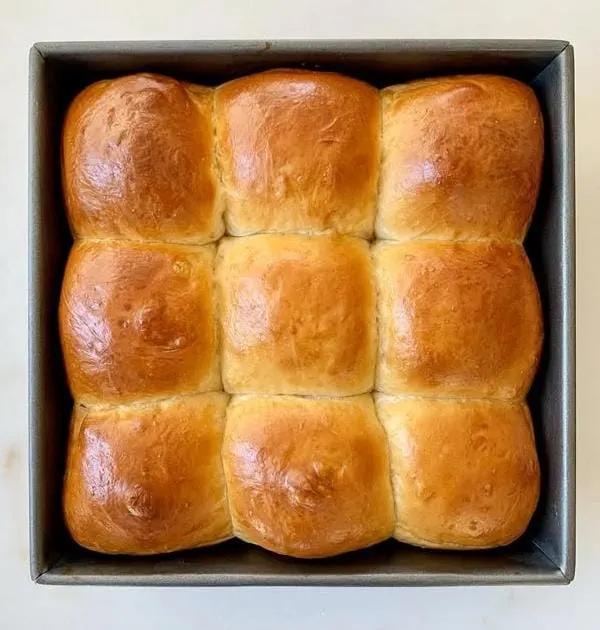
Bake the loaf on the center rack for 30–35 minutes, rotating once halfway through for even browning. If the top darkens too quickly, loosely cover with foil during the last 10 minutes. The bread is done when the internal temperature reaches 190°F (88°C). The crust should be golden brown, and the loaf will sound hollow when tapped.
Step 9: Cool and Slice
Remove from the oven and let the bread rest in the pan for 10 minutes. Then transfer to a wire rack to cool completely before slicing—at least 1 hour. Cutting too soon releases steam and can compress the delicate crumb. Once cool, slice with a serrated knife. The interior should appear feathery, silky, and slightly sweet-smelling.
Step 10: Storage
Store at room temperature in an airtight container or bread bag for up to 4 days. For longer storage, freeze slices in zip bags with parchment between them. Toast directly from frozen for convenience. Avoid refrigerating; it accelerates staling due to starch retrogradation.

Healthy Habits: How to Enjoy Japanese Milk Bread Mindfully
Japanese Milk Bread’s charm lies in its light sweetness and incredible softness — a texture that invites indulgence. But even this enriched bread can be part of a balanced diet when enjoyed mindfully. The first healthy habit is portion awareness. Because it’s rich in milk and butter, one or two slices per serving is ideal for breakfast or as a snack. Pair it with a protein source like eggs, cottage cheese, or peanut butter to balance its carbohydrates and slow digestion, helping you stay fuller longer.

The second habit is mindful pairing. Japanese Milk Bread’s mild flavor complements both sweet and savory toppings — think avocado with sesame seeds, or ricotta and honey. Instead of using thick layers of butter or jam, focus on fresh fruit, nut spreads, or even hummus for added nutrients. Its texture makes it perfect for toasting — one of the best ways to bring out its natural milk aroma while reducing the need for excess spreads.
When baking frequently, consider whole-grain substitutions. Replacing 25–30% of white bread flour with whole-wheat pastry or spelt flour retains the soft structure but boosts fiber and minerals. Tangzhong compensates for any dryness whole grains might add. The bread also freezes beautifully, which helps with portion control — freeze half the loaf sliced, then toast only what you need each morning.
Lastly, remember hydration. Enriched breads can be slightly higher in sodium and sugar. Pairing slices with water, herbal tea, or unsweetened milk ensures balance. Japanese Milk Bread can fit seamlessly into a moderate, nutrient-conscious lifestyle when enjoyed with attention to variety and balance.
Variations of Japanese Milk Bread
1. Classic Hokkaido Milk Bread

The original version uses the same proportions listed in the main recipe. It produces an ultra-soft, slightly sweet loaf with a silky, feathery crumb. Its flavor is delicate — perfect for sandwiches, toast, or milk toast desserts. You can use tangzhong made with equal parts milk and water for balanced softness and lightness. The result is the iconic “cloud bread” texture that stays tender for days.
For professional-level shine, brush the top with melted butter as soon as it leaves the oven. This gives the crust a soft finish that makes each slice melt in your mouth. If desired, you can bake the dough in a Pullman pan with the lid on for a perfectly square shokupan loaf that’s ideal for tea sandwiches or Japanese-style toast.
2. Whole-Wheat Tangzhong Milk Bread
To make a higher-fiber version, replace 30% (about 100 g) of bread flour with whole-wheat pastry flour. The tangzhong step remains identical, though you may add 10–15 g extra milk if the dough feels tight — whole grains absorb more liquid. The flavor becomes slightly nuttier and richer, while the structure remains soft due to tangzhong’s moisture-retaining effect.
This version works beautifully for breakfast toast or sandwich bread for children, as it has the nutrition of whole grains without the density often associated with wheat loaves. If you prefer a more rustic version, sprinkle rolled oats on top before baking or add 1 tablespoon of ground flaxseed to the dough for extra omega-3 fats.
3. Sweet Brioche-Style Milk Bread
For a dessert-style variation, increase the sugar to 70 g and butter to 60 g. Add 1 teaspoon of pure vanilla extract and ½ teaspoon of almond extract. This version is richer, more decadent, and slightly denser — reminiscent of French brioche but still uniquely soft. Use this dough for milk bread rolls, tear-and-share loaves, or filled buns.
You can also add fillings like red bean paste, chocolate chips, or custard for a Japanese bakery touch. Brush with egg wash and sprinkle pearl sugar on top for sweetness and texture. This loaf makes incredible French toast the next day, as the enriched dough soaks up custard beautifully without falling apart.
4. Savory Cheese and Herb Milk Bread
Transform milk bread into a savory delight by reducing sugar to 20 g and adding 1 cup of shredded cheese (mozzarella, cheddar, or parmesan) plus 1 teaspoon each of dried oregano and parsley. Fold half the cheese into the dough during shaping and sprinkle the rest on top before baking. The aroma during baking is irresistible.
This version pairs perfectly with soups, salads, or pasta dishes. It’s a great alternative to garlic bread — soft, cheesy, and satisfying without heavy oils. To take it up a notch, you can layer thin slices of ham or sun-dried tomatoes in the dough before rolling it up. It’s elegant enough for brunch but comforting for casual dinners.
5. Overnight No-Knead Milk Bread
For a simpler process, this variation skips intensive kneading. Combine all ingredients (except butter) in a bowl, mix until a rough dough forms, then let it rest overnight in the refrigerator (10–12 hours). The next morning, incorporate softened butter by folding the dough several times, shape, and let rise for 90 minutes before baking.
The long fermentation enhances flavor and makes gluten development occur naturally over time. You’ll get a soft, rich loaf with slightly more depth — almost like sourdough’s complexity without tanginess. It’s perfect for busy home bakers who want artisan texture without intensive mixing.
Serving and Storage Tips
Serve Japanese Milk Bread slightly warm or toasted to highlight its delicate sweetness. It pairs beautifully with honey butter, fruit preserves, or a simple spread of salted butter. For savory use, it makes exceptional sandwiches — think egg salad, tuna, cucumber, or katsu sandwiches. Its tight crumb means fillings won’t leak through, and the slices hold shape even when toasted.
For storage, keep the loaf in an airtight bread box or resealable bag at room temperature for up to 4 days. Avoid refrigeration, as it accelerates drying. For longer keeping, slice and freeze the bread, separating each slice with parchment paper. Frozen slices can be toasted directly from the freezer. For best results, warm slices for 10 seconds in the microwave before toasting to restore their signature softness.
Conclusion: The Art of Tangzhong and the Joy of Homemade Bread
Japanese Milk Bread exemplifies the elegance of baking — precision, patience, and a touch of science. Through the tangzhong method, you transform simple pantry ingredients into a loaf of extraordinary softness and longevity. The gelatinized flour mixture traps moisture, creating the signature feathery crumb that distinguishes shokupan from any Western-style bread. Once you’ve made it at home, you’ll understand why this recipe dominates Pinterest searches like “soft sandwich bread,” “fluffy milk bread,” and “Japanese bakery bread.”
Beyond taste and texture, baking Japanese Milk Bread is about the experience — the gentle kneading, the creamy scent of dough, and the golden loaf rising in the oven. It encourages mindfulness and creativity in the kitchen. Each variation — whether whole-grain, sweet, savory, or no-knead — reflects how adaptable the recipe is to every lifestyle and diet.
Once mastered, this bread becomes a foundation for endless ideas: stuffed buns, cinnamon twists, or even rolls for holiday dinners. It bridges cultures — Japanese technique meeting global kitchens — through something as universal as bread. And perhaps most importantly, it reminds every home baker that with a few ingredients, patience, and curiosity, extraordinary results are within reach.