Baked Pears Recipe — Easy Oven-Baked Pears with Honey, Spices & Toasted Nuts (Healthy Dessert)
Baked pears are a warm, gently caramelized dessert that celebrates fruit at its simplest while delivering a comforting, elegant finish for weeknight dinners or special occasions. When baked, firm-ripe pears soften and concentrate their natural sugars, taking on a honeyed, jammy character that pairs beautifully with spices, nuts, citrus, and creamy accompaniments. This makes baked pears ideal for people seeking a lighter dessert, a naturally gluten-free option, or a recipe that photographs beautifully for recipe boards and social sharing.

In this article you’ll find what baked pears are, why they work, their nutritional highlights, exact ingredient quantities and total yield, fully explained preparation steps in paragraph form, healthy habits for enjoying them, and multiple approachable variations so you can make baked pears to suit any season or dietary preference. The instructions are written to be clear and practical so you can reproduce reliably delicious results every time.
Also try: New Orleans-Style Beignets
What Are Baked Pears?
Baked pears are whole, halved, or cored pear fruits that are cooked in the oven with sweeteners, spices, and often additional liquid such as wine, juice, or syrup until tender and aromatic. The heat collapses pear cell walls and concentrates flavors, softens texture, and caramelizes surface sugars, creating a depth of flavor reminiscent of poached fruit but with roasted notes.

Unlike raw pears, baked pears are melt-in-the-mouth and can be served alone, with a sauce, alongside ice cream, yogurt, or ricotta, or as a component in tarts and grain bowls. Common pear varieties for baking include Bosc, Comice, Anjou, and Bartlett — choice depends on preferred firmness and sweetness; Bosc holds shape well, Comice is supremely juicy and sweet. Baking pears is a forgiving technique: even slightly underripe pears will soften and develop flavor, while very ripe pears will require gentler cooking to avoid collapse.
Also try: Fresh Mini Fruit Tarts
Nutritional Highlights
- Pears are a nutritious fruit rich in dietary fiber, vitamin C, potassium, and small amounts of B vitamins and antioxidants.
- A medium pear (about 178 g) contains roughly 100 calories, 6 grams of fiber, and provides a good source of soluble and insoluble fiber which supports digestion and satiety.
- Baking pears concentrates flavors but does not significantly reduce fiber content; however, added sweeteners and toppings change the nutritional profile — honey, brown sugar, or maple syrup increase sugars and calories while nuts contribute healthy fats and protein.
- Using minimal added sweetener, pairing with protein-rich accompaniments like Greek yogurt, and including nuts or seeds both increases nutrient density and makes the dessert more balanced.
- For those watching sodium, this recipe is naturally low-sodium; for those monitoring carbohydrates, be mindful of added syrups if you need precise intake control.
Recipe Yield and Scale
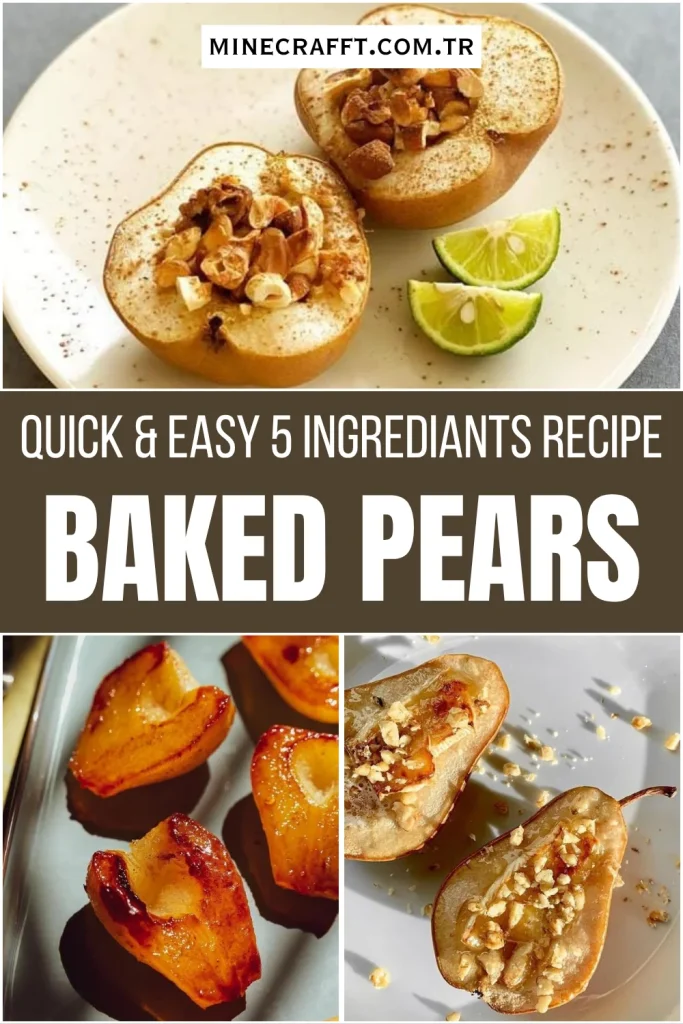
This recipe is written to yield 6 servings — six baked pear halves (3 whole pears halved) with a light sauce and toasted nut topping, suitable for 3–6 people depending on portioning (one half per person for generous desserts; two halves per person for larger gatherings).
The total finished weight of the recipe (fruit plus sauce and toppings) is approximately 1,000–1,100 grams depending on pear size and evaporation during baking. To scale, multiply ingredient quantities proportionally: double for a 12-half batch, or halve for a small family dinner. Baking time remains similar for modest scaling but check tenderness frequently; larger sheet pans with more pears may need a slightly longer oven time.
Also try: No-Bake Viral Deviled Strawberries
Main Ingredients — Exact Quantities and Full Explanations
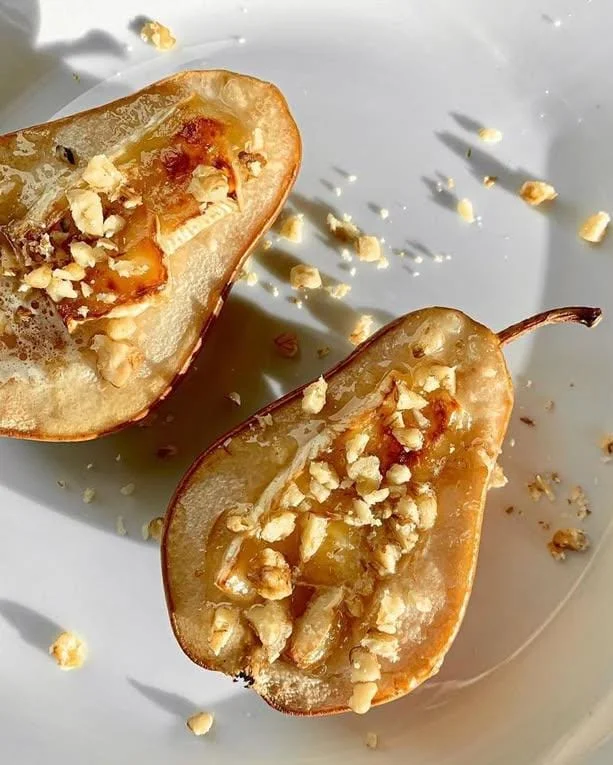
Below are the ingredients for six baked pear halves (three whole pears halved), with explicit quantities and reasons for each selection.
Pears — 3 medium Bosc pears (approximately 900 g total unpeeled; 300 g each)
Use Bosc for their firm flesh and honeyed flavor; they hold shape under heat and caramelize nicely. Choose pears that are ripe but still firm — they should yield slightly to gentle pressure near the stem but not be mushy. If Bosc is unavailable, Comice or Anjou are acceptable; adjust cooking time slightly for softer varieties.
Unsalted butter or plant-based butter — 45 g (3 tablespoons)
Butter browns lightly and adds a rich mouthfeel and glossy finish to the baked fruit; use unsalted to control overall salt. For a vegan/dairy-free version, substitute plant-based stick butter or coconut oil (keep same weight). The fat helps brown the exposed fruit edges and carry spices.
Honey or pure maple syrup — 60 g (3 tablespoons)
Honey or maple syrup sweetens and helps glaze the pears as they bake, contributing to caramelization and flavor complexity. Honey gives a floral note; maple syrup adds woody, caramel character and is vegan-friendly. Adjust amount according to pear sweetness and personal preferences.
Brown sugar (light or dark) — 30 g (2 tablespoons) optional
A small addition of brown sugar deepens caramel notes and enhances browning; use light for gentle molasses notes or dark for richer flavor. This is optional if you want to reduce refined sugar; simply increase honey/maple slightly if omitted.
Fresh lemon juice — 15 g (1 tablespoon)
Lemon juice brightens the flavor, balances sweetness, and prevents excessive browning of cut pear surfaces before baking. It also adds a subtle acidity to round the dessert.
Ground cinnamon — 2 g (1/2 teaspoon)
Cinnamon brings warm spice that complements baked pears and warms the overall flavor profile. Use freshly ground for best aromatics.
Ground cardamom (optional) — 0.5 g (1/8 teaspoon)
Cardamom is highly aromatic and pairs beautifully with pear; use sparingly because it can dominate. This optional addition lends a sophisticated, slightly floral spice.
Vanilla extract — 5 g (1 teaspoon)
Vanilla amplifies the sense of sweetness and adds depth to the baking juices. Pure vanilla extract yields the best flavor.
Pinch of salt — 0.5 g (1/8 teaspoon)
A small pinch of salt enhances sweetness and rounds the flavors without making the dish salty.
Water or white wine or apple juice — 120 ml (1/2 cup)
This liquid helps create a shallow baking syrup that poaches and glazes the pears as they roast; choose water for simplicity, dry white wine for depth, or apple juice for added fruitiness. The liquid also limits sticking and encourages even heat transfer.
Toasted chopped walnuts or pecans — 60 g (1/2 cup)
Nuts add crunch, healthy fats, and contrast to the soft baked pears. Toast before chopping to increase flavor and aroma.
Optional finishing: Greek yogurt or mascarpone — 240 g (1 cup) total for serving
Serve each pear with a dollop of Greek yogurt (protein-rich, tangy) or mascarpone (rich and creamy) depending on desired richness; quantities per serving are about 2 tablespoons each.

Pantry Staples and Equipment
You will need an oven, a medium to large baking dish (9×13 or similar) or rimmed baking sheet with sides, a small saucepan, a pastry brush or spoon for glazing, a sharp paring knife, mixing bowl, measuring spoons and cups or a scale, parchment if desired, and an oven thermometer if your oven runs hot or cool.
How to Prepare
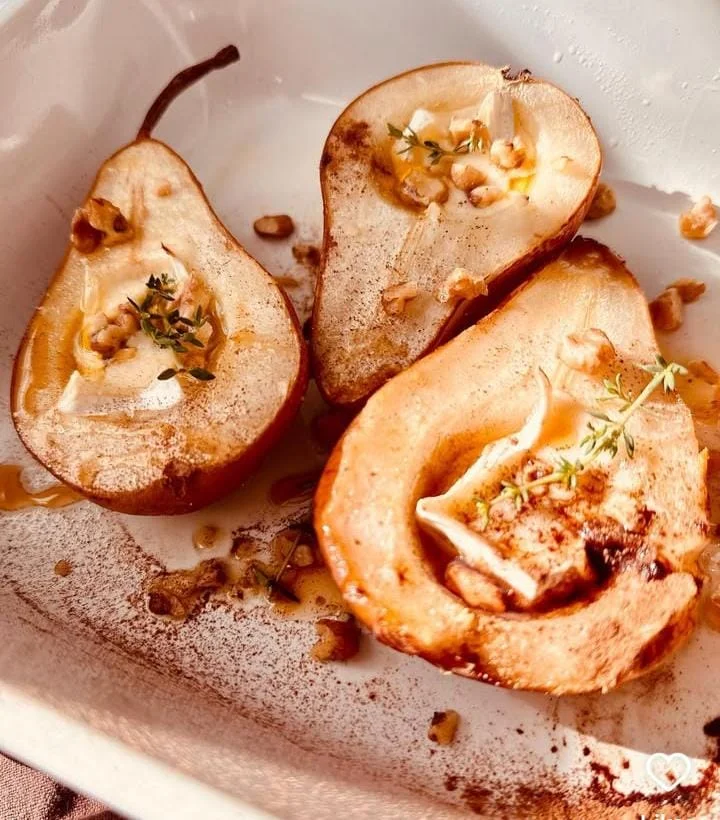
- Preheat your oven to 190°C (375°F) and position a rack in the middle of the oven for even heat circulation. While the oven warms, wash the pears thoroughly, then halve each pear lengthwise and, if desired, use a small melon baller or spoon to remove the core and seeds creating a shallow cavity for filling; leave the stem intact for presentation if you like.
- Place the pear halves cut-side up in a lightly buttered baking dish, snug but not overcrowded so heat can circulate. In a small bowl combine the melted butter (or plant butter), honey or maple syrup, lemon juice, brown sugar if using, vanilla extract, ground cinnamon, cardamom if using, and a pinch of salt; whisk until emulsified.
- Pour the water, white wine, or apple juice into the dish around — not over — the pears to create a bathing syrup that will simmer and glaze them during baking, then spoon a little of the butter-syrup mixture over each pear to coat the exposed flesh.
- Bake the pears for 25 to 35 minutes depending on size and ripeness; check at 20 minutes and baste with the pan juices every 8–10 minutes to ensure even caramelization. The pears should be fork-tender but still hold their shape; for very ripe pears reduce baking time to avoid collapse.
- Once baked, remove the dish carefully and use a spoon to spoon hot pan syrup over the pears for an attractive glaze; scatter toasted chopped walnuts or pecans over the pears while warm so they adhere to the syrup.
- Let the pears rest for five minutes to cool slightly, then serve warm with a spoonful of Greek yogurt or a small quenelle of mascarpone alongside, and finish with a sprinkle of finely chopped fresh herbs like mint or a light dusting of ground cinnamon if desired.
- Leftover pears can be refrigerated in their syrup for up to three days and reheated gently in a low oven; the syrup makes a wonderful topping for oatmeal, yoghurt, or ice cream.
Timing, Texture Notes and Ripeness Guidance
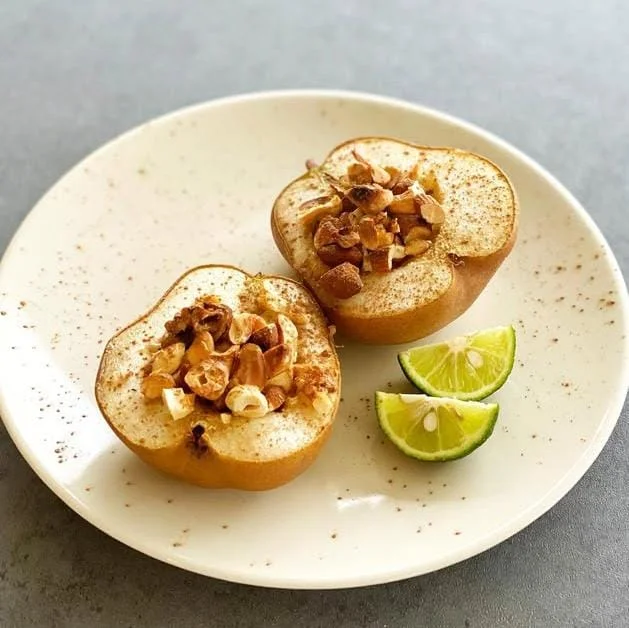
Aim for pears that are ripe but not mushy; they should give a slight yield when pressed near the stem. Firmer pears require longer baking to reach tenderness; softer pears require shorter time to avoid a mealy collapse. Baking concentrates flavor — if you want a more subtly flavored result reduce sugar and shorten the bake. For a poached-like texture, bake covered with foil for the first 15 minutes to trap steam, then remove foil to allow caramelization; for roasted, bake uncovered for continuous browning.
Healthy Habits and Serving Suggestions
To keep the dessert lighter, favor maple syrup or a modest amount of honey over refined sugar and serve pears with Greek yogurt rather than whipped cream to add protein. Balance portion sizes by serving one half per person, and pair with a small serving of nuts to increase satiety and provide healthy fats.
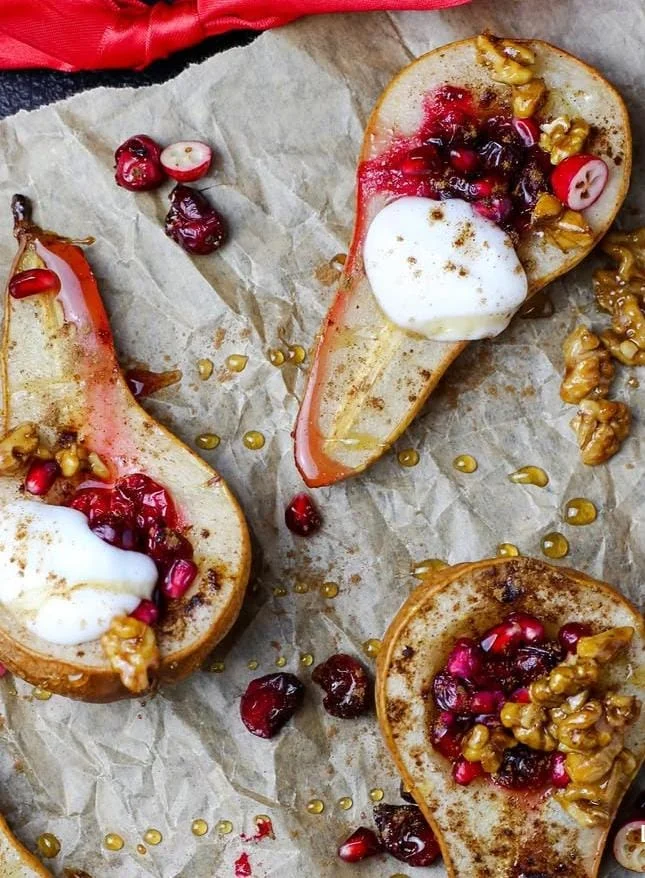
For lower-sugar options, omit brown sugar entirely and reduce honey/maple to 1 tablespoon, relying on pear natural sugars and spices; serve smaller portions or with unsweetened yogurt. If you are monitoring blood sugar, select less-sweet pear varieties and serve with protein (yogurt, ricotta) to moderate glycemic response. Baking pears instead of frying or serving heavy desserts is an easy way to increase fruit intake while enjoying a satisfying, warm finish to meals.
Variations
1) Spiced Red Wine Baked Pears
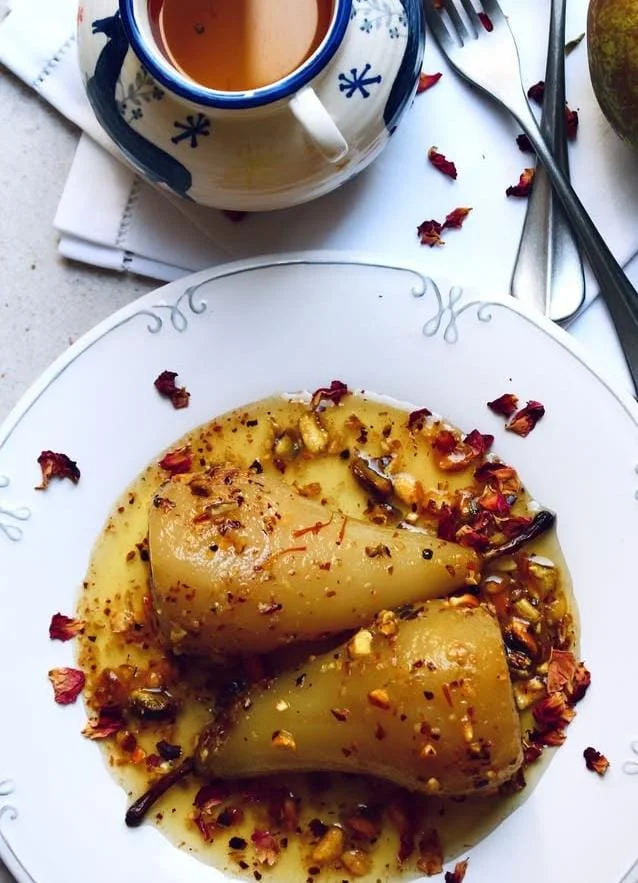
Spiced red wine baked pears are an indulgent, adult-friendly version that uses a reduced red wine syrup to create deep, complex flavors. Replace the 120 ml liquid with 120 ml full-bodied red wine and add a cinnamon stick and 2 whole cloves to the baking dish; the alcohol will reduce and concentrate into a glossy syrup as the pears bake.
The tannins in the wine interact with the pear sugars to make a slightly tangy, spiced reduction that feels luxurious and pairs well with mascarpone. Use honey or brown sugar sparingly because the wine reduction adds depth and perceived sweetness. Serve warm with a drizzle of the reduced wine syrup and a small scoop of vanilla gelato or crème fraîche for contrast.
For a non-alcoholic but similarly flavored option, substitute pomegranate juice or concentrated grape juice and include the same spice bundle; simmer the juice briefly before adding to the baking dish to concentrate flavor.
Toasted almonds make an excellent crunchy finish for this variation, complementing the deep fruit notes of the syrup. This version is perfect for holiday menus or intimate dinners where a sophisticated dessert is desired. Keep the baking time similar but monitor for caramelization; wine can speed up browning. Label as spiced red wine pears when serving to guests so those avoiding alcohol can choose an alternative.
2) Honey-Vanilla Baked Pears with Almond Crumble
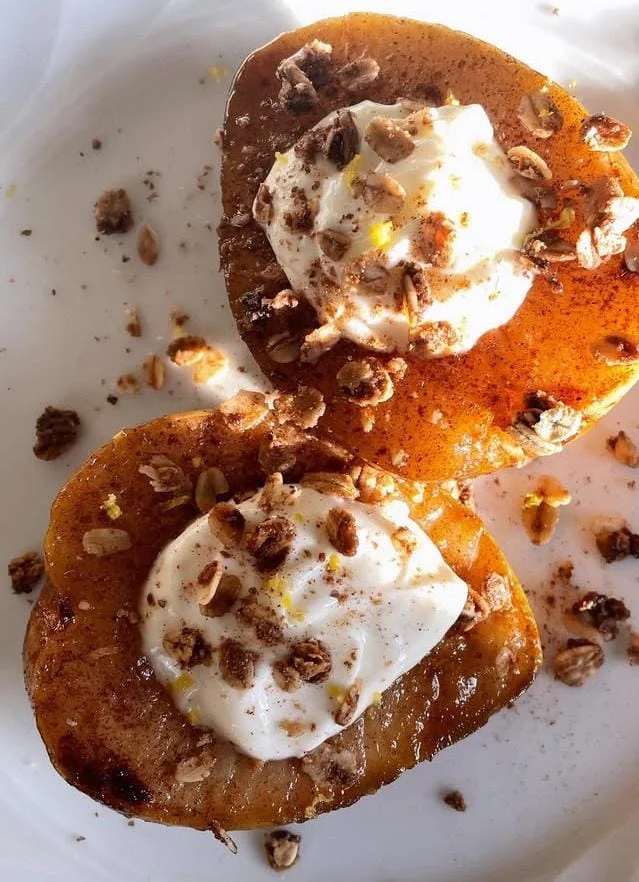
Honey-vanilla baked pears with almond crumble emphasize sweet, floral honey and the textural contrast of a crunchy almond streusel. Prepare the pears as in the base recipe and make an almond crumble by combining 60 g finely chopped toasted almonds, 30 g rolled oats, 20 g brown sugar, 15 g melted butter or coconut oil, and a pinch of cinnamon; sprinkle this mixture into the pear cavities and atop the pears before baking.
The crumble bakes into golden shards that add crunch and a nutty aroma that contrasts with the soft fruit. Finish with a light drizzle of additional warm honey and a pinch of flaky sea salt for complexity. Serve with plain Greek yogurt or a small scoop of ricotta for creamy balance.
This variation can be made gluten-free by substituting gluten-free oats and ensuring oats are certified GF if needed. For a dairy-free crumble, use coconut oil and omit butter. The almond crumble also works well as a topping for baked apples, and leftover crumble can be stored for breakfast granola use. Adjust sweetness by using maple for a different flavor profile. This crowd-pleasing version is excellent for brunch or as a family dessert.
3) Cardamom-Orange Roasted Pears with Pistachio
Cardamom-orange roasted pears bring bright citrus and a fragrant spice that elevates the fruit to Middle Eastern–inspired flavors. Add 1 teaspoon finely grated orange zest and 1/4 teaspoon ground cardamom to the butter-syrup mixture and scatter 60 g chopped pistachios over the pears before serving.
The citrus oils lift the floral notes of the cardamom while pistachios add color and a pleasing green contrast. Bake as usual until pears are tender and aromatic; the orange zest will lightly caramelize on the surface. Serve with a dollop of strained yogurt sweetened with a touch of honey for an elegant plate.
For visual appeal, finish with a few torn mint leaves and a sprinkle of crushed rose petals (edible grade) for a sophisticated garnish. This variation pairs beautifully with spiced cakes or tea service and is an excellent vegetarian dessert option. The pistachio addition increases healthy fats and makes the dish more substantial. For a nut-free alternative, use toasted pepitas for crunch. Adjust spices according to preference — cardamom is potent so a little goes a long way.
4) Baked Pears with Blue Cheese & Walnuts (Savory-sweet)
Pairing fruit with blue cheese offers a classic savory-sweet interplay that works wonderfully with baked pears. After baking, top each warm pear half with 20–25 g crumbled blue cheese and 10 g toasted walnuts; the residual heat softens the cheese into a creamy finish that contrasts the sweet syrup.
Add a drizzle of honey and a scattering of arugula or watercress for peppery freshness if serving as a starter or light salad. This version works well as a composed salad course or an appetizer at dinner parties. Balance is key — use small amounts of blue cheese to avoid overwhelming the fruit.
For a milder cheese option, swap gorgonzola for ricotta salata or goat cheese for those sensitive to strong blue flavors; each delivers a salty contrast that enhances pear sweetness. Serve this variation with slices of crusty bread or toasted baguette to make a small sharing plate. The combination is especially elegant with a glass of light white wine like a Riesling. Keep portions small to maintain dessert-like restraint. This recipe shows how baked pears can be sweet or savory depending on accompaniments.
Troubleshooting Common Problems
If pears become mushy, you likely used overripe fruit or baked too long; use slightly firmer pears and reduce bake time next time. If the pan syrup is too thin, remove pears and simmer the liquid on the stovetop for a few minutes to concentrate; pour back over pears when slightly cooled.
If the pears don’t brown, finish under a hot broiler for 1–2 minutes watching carefully to avoid burning. If the topping falls off, spoon warm syrup over the fruit to help adhesion or press toppings gently into the hot surface after baking. For uneven cooking, rotate the pan halfway and ensure the pears are arranged cut-side up for consistent heat exposure.
Storage and Reheating
Store baked pears in an airtight container with their syrup refrigerated for up to three days. To reheat, warm gently in a 160°C (325°F) oven for 8–12 minutes or microwave briefly in 20–30 second bursts until warm — avoid overheating. The syrup may thicken in the fridge; thin it with a splash of water, wine, or juice while reheating. Reheated pears are excellent over oatmeal, pancakes, or on yogurt for breakfast. Do not freeze whole baked pears as thawing can make texture mealy; if you must freeze, freeze puree or compote for later use.
Final Notes and Serving Ideas
Baked pears are versatile — they bridge breakfast and dessert, pair with savory cheeses, and adapt to seasonal flavors. Keep a simple batch of baked pears on hand for effortless entertaining; they make an attractive plated dessert with minimal effort. Experiment with different pear varieties and liquids — cider, fortified wine, or citrus juices each give distinct characteristics. Adjust sweetness and spices to suit personal taste or dietary needs. Most importantly, enjoy baked pears as a way to make fruit feel indulgent while retaining wholesome qualities.